Clustered-dot dithering matrix generation #5

Description

Hi, I saw the post in your blog re dithering, where you asked if one know how to do clustered dithering to contact you. Dithering you mentioned is usally called halftone dithering and have long history in silk printing and offset printing. You can find many resources on it on the net, but what you have to do is sample your image withe some frequency in 256 levels of gray, and then replace each sample by 16x16 matrix of pixels representing 256 levels of gray. It can be also be done with lines instead of dots resulting in line raster, where you vary width of the line with intensity. It is also not bad idea to do bluring and unsharp masking before sampling which is equivalent of applying lowpas 2d filter before sampling as in Niquist theorem where you first filter the signal before sampling to avoid artifacts. If you want to do quick experiment, just replace each pixel with 8x8 pixels representing black dots on white background for levels below 50% and white dots on black background for leves above 50%. If you need any help feel free to contact me at robert.aleksic at gmail.com. cheers robby
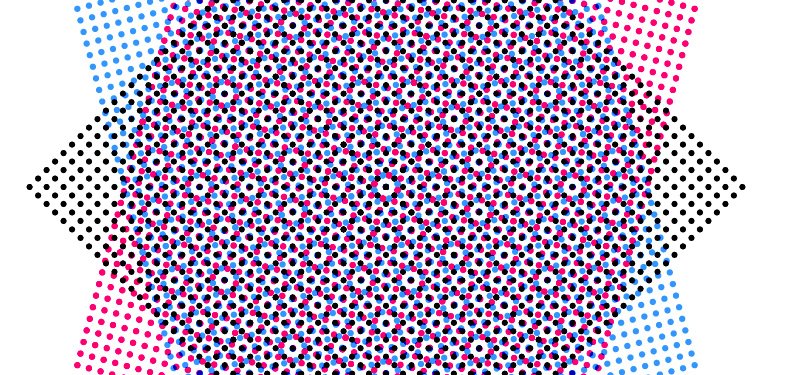
p.s. if you want to do it in color, you separate your image to components like CMYK for ofset printing and then apply all four images one on on top of the other, with varying angles of raster to obtaine nice rosette like here: https://cdn2.hubspot.net/hubfs/2296165/Imported_Blog_Media/CMKdot-1.jpg. Black component is created to avoid usage of to much ink and preserve gray balance, but that is another topic - color calibration.