Current FFT implementation uses classic Decimation in Time, Radix-2, in-place algorithm, which is far from being the best in class. I am comparing Float64, Float32, and Array implementations on three V8 based engines.
Raw benchmarks for (node 0.12.2, 0.10.38; iojs 1.6.3, FF36) can be found in Travis logs here: https://travis-ci.org/drom/fourier
Here are some charts I have crafted from the results on my Intel(R) Core(TM) i5-4200U CPU @ 1.60GHz. most of points are less then ±5% variation:

Using FFT Benchmark Methodology from here: http://www.fftw.org/speed/method.html
Here is the chart from http://www.fftw.org/speed/CoreDuo-3.0GHz-icc64/ :
Which includes some state of art FFT implementations in C.
Double precision:

Single precision:
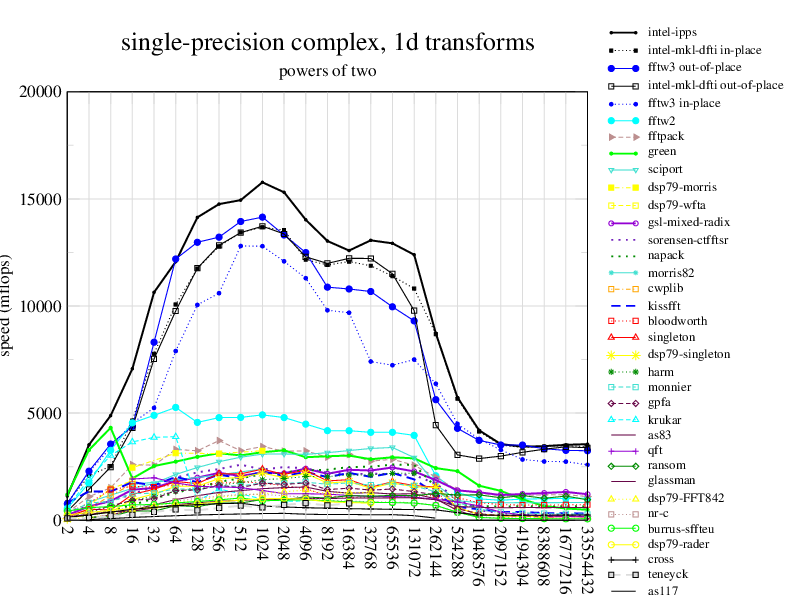
Obviously this just the beginning and we are x20 slower then the best;
and results are different with different version of V8 engine;
and because of dynamic nature of modern JavaScript run-time speed may suddenly change.
In my list to try:
Any other ideas are welcome!

Current FFT implementation uses classic Decimation in Time, Radix-2, in-place algorithm, which is far from being the best in class. I am comparing Float64, Float32, and Array implementations on three V8 based engines.
Raw benchmarks for (node 0.12.2, 0.10.38; iojs 1.6.3, FF36) can be found in Travis logs here: https://travis-ci.org/drom/fourier
Here are some charts I have crafted from the results on my Intel(R) Core(TM) i5-4200U CPU @ 1.60GHz. most of points are less then ±5% variation:
Using FFT Benchmark Methodology from here: http://www.fftw.org/speed/method.html
Here is the chart from http://www.fftw.org/speed/CoreDuo-3.0GHz-icc64/ :
Which includes some state of art FFT implementations in C.
Double precision:

Single precision:

Obviously this just the beginning and we are x20 slower then the best;
and results are different with different version of V8 engine;
and because of dynamic nature of modern JavaScript run-time speed may suddenly change.
In my list to try:
Any other ideas are welcome!